Headless vs traditional
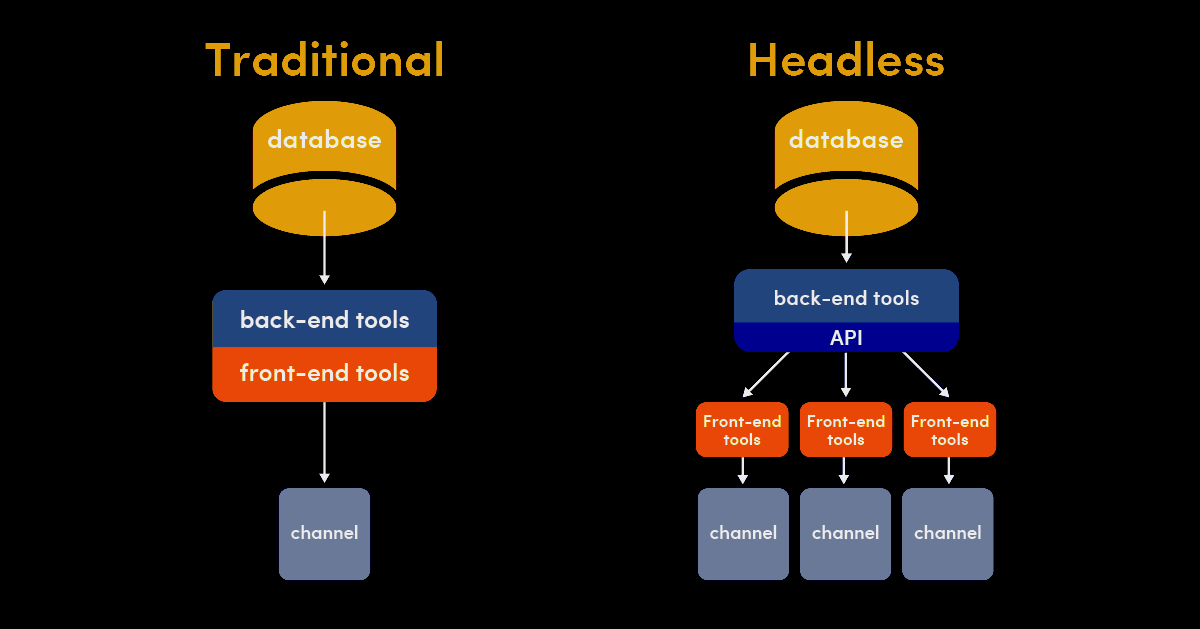
The Shopify API
Headless Shopify is enabled by the Shopify storefront API. Developers can leverage the API to store, fetch, and configure information related to carts, customers, checkout, orders, products, and more. The Storefront API is a GraphQL API.Headless pros and cons
Running Shopify headless has the following general advantages:- Omnichannel shopping: Use the same Shopify engine to reach all your customers and easily add more touchpoints as and when you need them.
- Better SEO: Customize the views that affect SEO and build a user-friendly website that loads faster and ranks higher on search engines.
- Faster loading: Move processing to the backend and optimise your front-end to show only what is needed at any time and no more.
- Customization: Use the front-end technology and design that suits you best, and enjoy the flexibility to upgrade both of those things in the future without affecting the backend.
- Shopify’s built-in design features: You’ll no longer be able to use things like themes, templates, or any other built-in design elements. You’ll need to build your front-end and all its design elements more or less from scratch.
- Support needed: Full customization will require constant developer support. Managing multiple front-ends can be a lot of work for inexperienced or understaffed development teams.
Running headless with Engage
In the case of Engage, running headless Shopify comes with a few more considerations:- Abandoned cart is not provided by the app in a headless setup, because it relies on the storefront. To use it, whoever builds your custom front-end must implement the tracking script themselves.
- As mentioned, the Engage app theme block is not used in headless. The information it displays — vouchers, promotions, points and member levels — can all be accessed through the Engage API (contact overview).